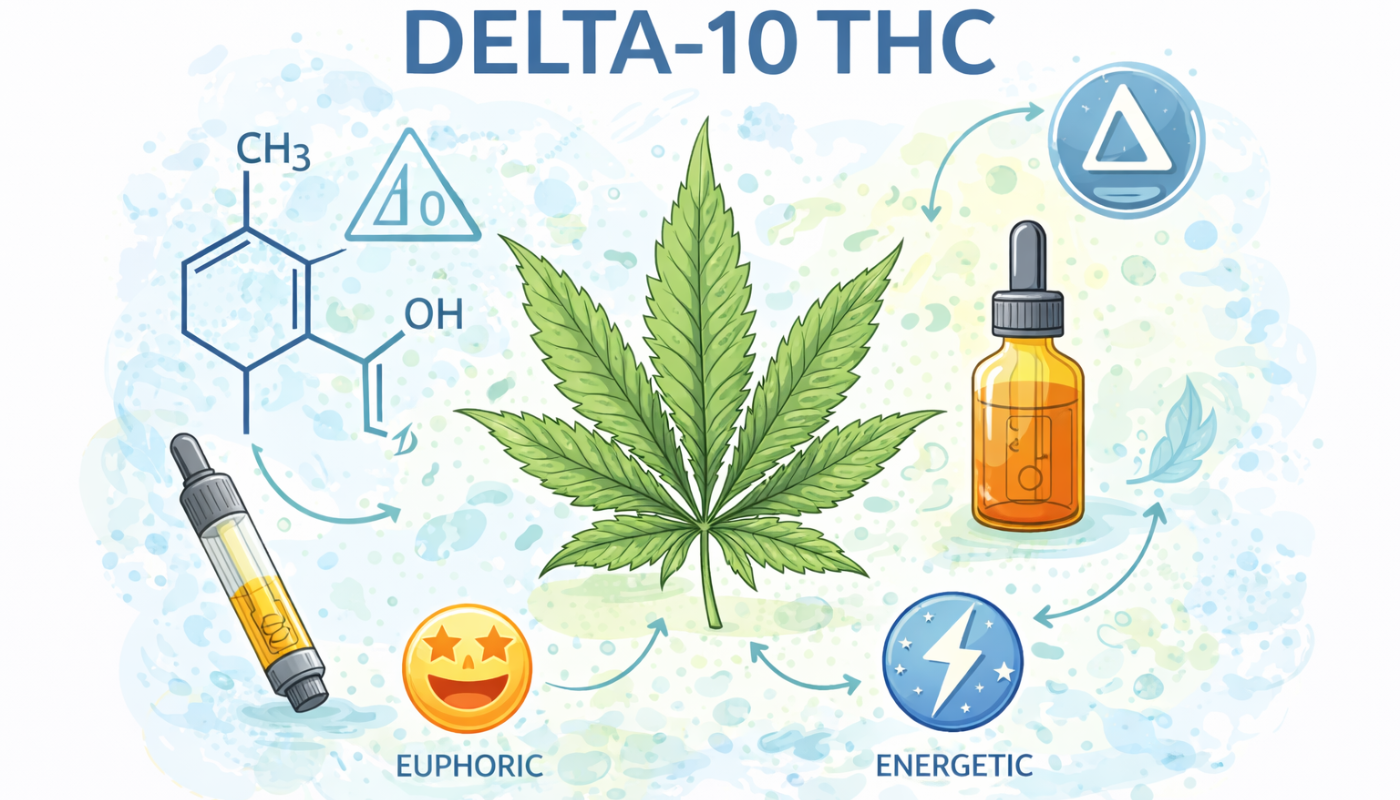
Delta-10 THC is one of several THC isomers, meaning it shares the same chemical formula as other forms of THC but has a slightly different molecular structure. These small structural differences can change how the compound is classified and studied. Delta-10 is typically discussed in scientific and regulatory literature as occurring only in very small or trace amounts in the cannabis plant, rather than being a major naturally abundant compound.
Therefore, it’s not something you need to actively look for when it comes to medical cannabis prescriptions from licensed clinics like Alternaleaf. We’re able to legally prescribe medical cannabis with varying levels of both THC and CBD.
But let’s rewind. THC and CBD are two of over 100 cannabinoids that you’ve probably heard of, and you’ll see them a lot when researching medical cannabis. THC is psychoactive and may contribute to the ‘high’ feeling associated with cannabis. CBD is non-physioactive, meaning it won’t make you feel ‘high’.
Some conditions and symptoms may benefit more from a combination of CBD and THC. This is known as the entourage effect. When these compounds work together, they can provide targeted and enhanced therapeutic effects.
Since 2018, medical cannabis has been legally available in the UK when prescribed by a specialist doctor through licensed clinics like Alternaleaf. You can find out if you’re eligible for a medical cannabis prescription by completing the quick eligibility checker on our website.
Please note: Cannabis-based medicines are prescription-only medicines. They may not be suitable for everyone, and eligibility is determined by independent clinical assessment. Treatment is not first-line and outcomes vary; benefits are not guaranteed, and side effects and risks exist.
Below we’ll be exploring Delta 10 in cannabis that’s prescribed, and whether it’s something you need to be looking for.
What Is Delta-10-THC?
As we said above, Delta-10 THC is a form of tetrahydrocannabinol (THC), which belongs to a group of compounds in cannabis known as cannabinoids. It is one of several THC isomers, meaning it has a similar chemical makeup to other forms of THC, but differs slightly in its molecular structure. These structural differences are what distinguish Delta-10 from other forms of THC in scientific classification.
There’s very little research around Delta-10 THC, but we do know it can be made in a lab using hemp. Early reports suggest it may have mild psychoactive effects, but evidence is limited. But with little to no research, we’d take that with a pinch of salt.
How Delta-10 Differs From Delta-9 and Delta-8
Delta-9 THC is the most well-known form of THC and is the compound most commonly referenced in cannabis research and regulation. Delta 9 THC is the main cannabinoid in cannabis that’s associated with inducing a high when used recreationally. It’s usually referred to as just THC.
Delta-8 and Delta-10 are structural variants, or isomers, of THC, meaning they share the same chemical formula but differ slightly in how their atoms are arranged. Again, these small differences in molecular structure are what distinguish each form in scientific classification.
Where Delta-10 Is Discussed in Cannabis Products
Delta-10 is typically discussed in the context of cannabinoids that may be present in very small amounts in the cannabis plant or in products described as derived from hemp or cannabis. It’s most often referenced in scientific or regulatory discussions about lesser-known THC isomers rather than as a commonly occurring compound. But even then, it’s not talked about very much.
With little to no research surrounding this THC isomer, it’s unlikely you’ll hear it being talked about in your medical cannabis prescription.
In other words, Delta-10 is not widely recognised as a standard component of regulated medical cannabis products in the UK.
How Delta-10 Is Described in Research and Online Sources
Some online sources describe Delta-10 THC as having psychoactive properties due to its interaction with cannabinoid receptors in the body, similar to other forms of THC. However, the scientific evidence on Delta-10 is currently very limited, with most information coming from early-stage research rather than established clinical studies.
It’s also important to note that - as we said before - Delta-10 is not part of standard UK medical cannabis prescribing frameworks and is not recognised as a regulated cannabis-based product for medicinal use.
Is Delta-10 Legal in the UK?
In the UK, THC and other “controlled cannabinoids” are regulated under drug laws such as the Misuse of Drugs Act 1971. The legal status of substances like Delta-10 depends on whether they fall within these controlled classifications. Recreational cannabis is illegal.
As we said above, Delta-10 is not used within regulated UK medical cannabis prescribing and is not recognised as a cannabis-based product for medicinal use.
FAQs
Is Delta-10 legal in the UK?
The legal framework surrounding Delta-10 THC is complex. You don’t need to actively look for it when it comes to medical cannabis prescriptions from licensed clinics like Alternaleaf. We’re able to legally prescribe treatment with varying levels of both THC and CBD. Recreational cannabis use is illegal.
Is Delta-10 prescribed in the UK?
No, Delta-10 is not prescribed in the UK, as it is not a recognised cannabis-based product for medicinal use under current prescribing guidance. Licensed clinics like Alternaleaf are able to legally prescribe treatment with varying levels of both THC and CBD.
Summary
If you’re considering medical cannabis, the best thing to do is seek the help of a licensed medical cannabis clinic like Alternaleaf. Find out if you’re eligible by heading to our website and completing our 30 second eligibility checker.